
竹工品・木工品
<Bamboo and Wood>
あけび籠
Akebi Kago
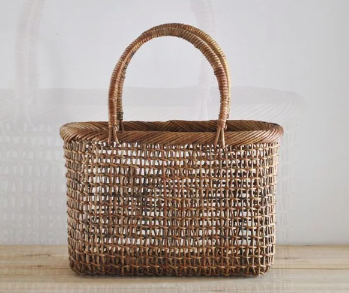

青森県のあけび蔓細工の歴史は、古く弥生時代にまでさかのぼります。現在に伝わるあけび蔓細工は、幕末期、岩木山麓の温泉に湯治に訪れた会津の浪士によってその技術が伝えられたと言われています。通常、夏から秋にかけて「ミツバアケビ」の若いつるを採取し、50本を一束にして2~3年かけて乾燥・保存します。それを水に浸けてやわらかい状態にし、まず底を編み、次に胴、縁とていねいに編んでいきます。つるの採取や編みはもちろん、木型もすべて職人の手作り。材料も年々減少しているため、貴重な工芸品として見直され始めています。
The history of Akebia vine crafts in Aomori Prefecture dates back to the Yayoi period, and Aizu samurai who visited the hot springs at the foot of Mt. Iwaki during the late Edo period refined Akebia basket-making techniques that have been passed down and are still being used today. Young Akebia trifoliate vines are typically harvested from summer to autumn, bundled and preserved for 2 to 3 years, then soaked in water to soften them. Craftsmen weave the bottom of the basket first, followed by the body and edges. Every step of the process, from harvesting and weaving to finishing, is performed by hand. Today, however, the materials used to create these baskets are becoming increasingly scarce.